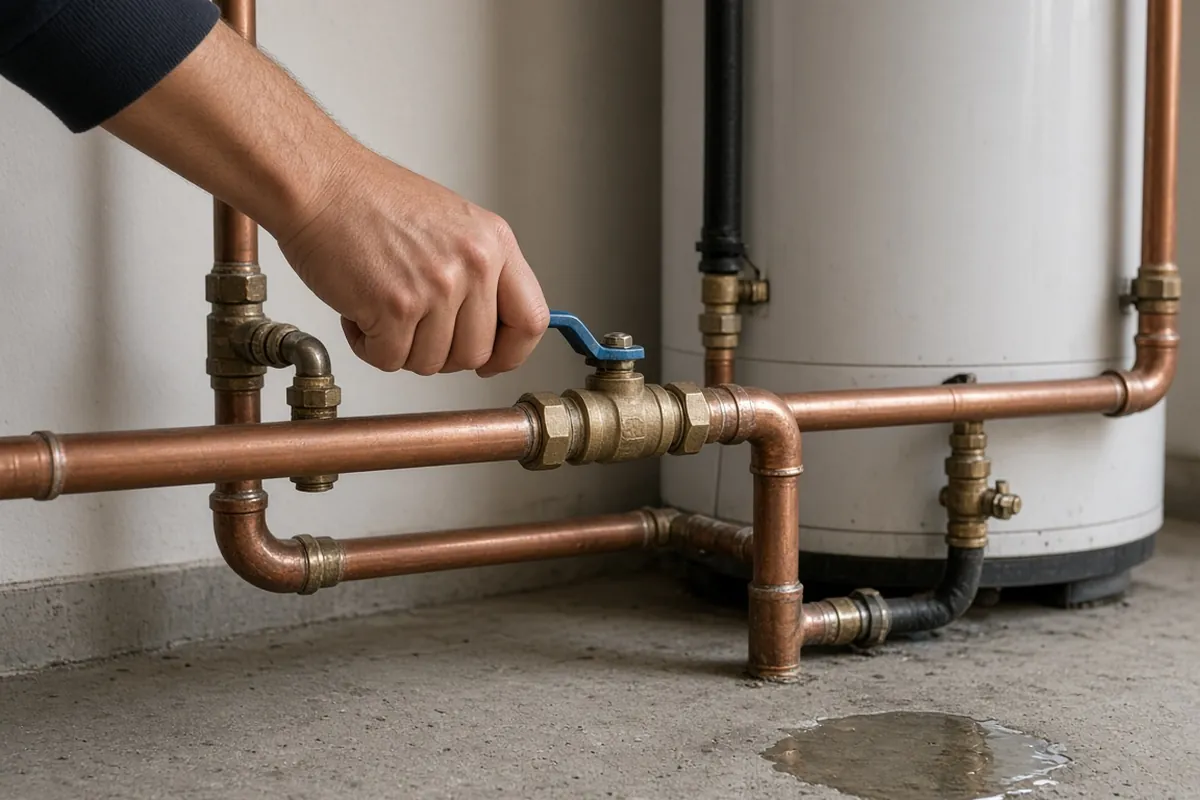
1. Make the area safe before you step in
Water and electricity are the first danger, not the damage. If water has reached outlets, power strips, a furnace or appliances, or if the ceiling is sagging, do not walk into the room. Turn off power to that part of the house at the breaker panel, but only if you can reach the panel without standing in water. If you cannot, leave the room and wait for help.
- Keep children and pets out of wet rooms.
- Watch for a bulging or stained ceiling. Water collects above drywall and can bring a section down.
- If you smell gas near a water heater or furnace, leave the house and call the gas utility from outside.
2. Stop the water at its source
Most indoor floods in The Colony come from a burst supply line, a failed water heater, an overflowing appliance or a slab leak. For any of these, the fastest fix is the main shutoff valve. In most homes here it sits in the meter box near the street curb, or on an interior wall close to where the front hose bib is. Close it fully, then open a faucet on the lowest floor to release pressure in the lines.
If the water is coming from outside, such as storm runoff or a backed-up drain, shutting off the main will not help. Focus on safety and on moving belongings out of the way. Our pipe freeze shutoff guide covers valve locations in more detail.
3. Work out what kind of water it is
Water from a clean supply line is a different job from water that came from a toilet, a sewer backup or a flooded yard. Clean water can be handled with care; water from a drain, toilet or outside should not be touched without gloves and boots, and should not be mopped back into the house. Our guide to clean, gray and black water explains the difference.
4. Move what you can, lift what you cannot
- Carry rugs, electronics, papers and photos to a dry room.
- Put aluminum foil or plastic lids under the legs of sofas and tables so wet carpet does not stain the wood.
- Lift curtains and bed skirts off the floor.
- Leave built-in items and wall-to-wall carpet where they are. Pulling up carpet yourself can tear the pad and spread contaminated water.
5. Keep a record
Before anything is moved or thrown out, take photos and short videos of every wet room, the source of the leak and any damaged belongings. Note the time you found the water and when you shut it off. A clear record helps any contractor you hire understand how far the water travelled and how long it sat.
6. Start air moving, but do not seal the room
Open interior doors and run the home's air conditioning to pull humidity down. Floor fans help on clean-water losses. Do not run fans in rooms with sewage or flood water, because they spread contamination. Household fans and towels will not dry the inside of walls, subfloors or cabinets; that needs moisture meters and commercial drying equipment. See how structural drying works.
7. Things to avoid
- Do not use a household vacuum on standing water.
- Do not turn on ceiling lights or fans in a room with a wet ceiling.
- Do not paint or seal over wet drywall. Mold can grow behind it within a few days.
- Do not wait for the surface to look dry. Water wicks into drywall, baseboards and the slab well beyond the visible wet area.
When to call for help
Call for professional help if water has soaked into carpet pad, drywall or wood flooring; if it came from a drain, toilet or outside; if a ceiling is wet; or if you cannot find the source. A local restoration contractor can measure where the moisture went and set up water extraction and drying equipment.
Water still spreading, or already into walls and flooring?
Call 24/7: (972) 430-3265The Colony Water Damage is a free referral service. Your call connects you with an independent local contractor.