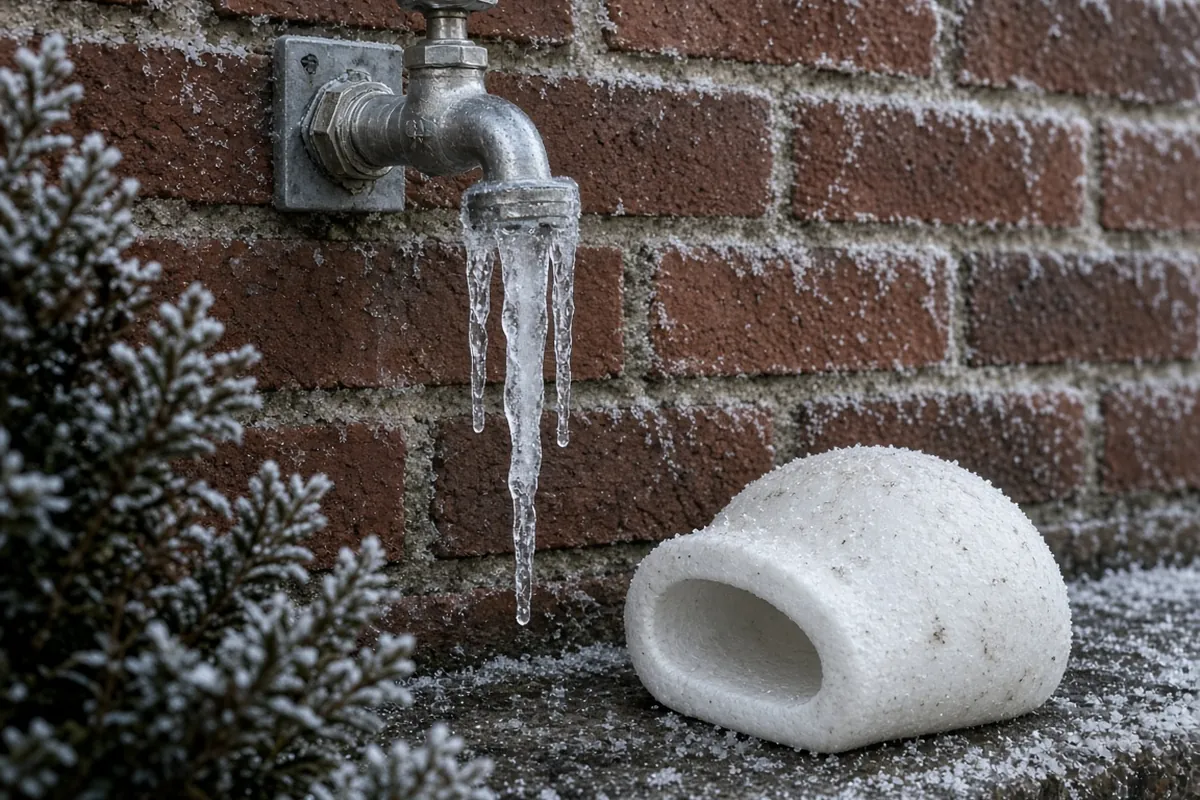
Why North Texas Homes Freeze So Easily
The Colony's homes were built for heat, not hard freezes. Attics are vented to outside air, and water lines run through them and through exterior walls with modest insulation. When a blue norther drops temperatures into the teens for a full night, those lines are the first to freeze, and as the ice expands, it splits copper and pushes fittings apart. The flood usually starts at thaw, when full pressure returns to a pipe that is no longer whole. Slab construction adds a second risk: lines under the foundation are safe from freezing, but the risers where they enter walls are not.
Before the Freeze: A 20-Minute Checklist
Find your shutoff today, not during the emergency. Your main valve is either in the meter box at the street curb (you will need a meter key, available at any hardware store) or on an interior wall near the front hose bib. Turn it once to confirm it moves. Disconnect garden hoses and shut off exterior faucets from their indoor valves if fitted. Insulate exposed lines in the attic and garage with foam pipe sleeves, the cheapest freeze protection there is. Know your breaker panel location so you can kill power to a flooded room without searching in the dark.
During a Hard Freeze
Let vulnerable faucets drip slowly, moving water resists freezing and relieves pressure. Open cabinet doors under sinks on exterior walls so warm room air reaches the pipes. Keep the thermostat at a steady temperature day and night; a deep nighttime setback is when pipes freeze. If a faucet slows to a trickle or stops, that line is freezing. Act as if it will burst, because it may already have.
If a Pipe Bursts: The Shutoff Sequence
1. Shut off the main water. Meter box or house valve. Turn it fully. This single step caps the damage; everything else can happen at human speed. 2. Kill power to wet areas at the breaker panel if water is anywhere near outlets or appliances. 3. Drain the lines by opening the lowest faucets in the house and letting them run dry. 4. Photograph everything: the split pipe, standing water, affected rooms, for your own records before cleanup moves anything. 5. Call for extraction and drying. Water in walls and floors starts wicking immediately; the burst pipe cleanup process exists precisely for this moment.
After the Shutoff: What Happens Next
The responding professionals extract standing water, map hidden moisture in walls and floors with thermal imaging, and dry the structure to a meter-verified baseline, because the split pipe is a plumbing repair, but the water it released is a building problem. Homes that get extraction and structural drying started the same day routinely save drywall and flooring that a weekend of waiting would lose. If the freeze exposed a line under the slab instead, the slab leak cleanup page covers how that moisture is found and dried.
Keep this guide's one lesson: the valve location is the whole game. Walk out to your meter box on a calm day, open it, and know your key fits. That five minutes is worth more than everything else on this page combined.
Dealing with a burst pipe or freeze damage right now?
Call 24/7: (972) 430-3265