Slab Leak Water Cleanup in The Colony, TX
A leak under your foundation floods silently for weeks before it shows. We connect you with professionals who find the moisture, stop the damage, and dry the structure, verified by meter, not guesswork.
The Leak You Cannot See, and the Damage You Can
Every home in The Colony sits on a concrete slab, and the supply lines running beneath it live in soil that shifts with North Texas drought and rain cycles. Over years, that micro-movement, plus soil chemistry working on copper, opens pinhole leaks that release water into the ground and the slab itself, day and night, without a single visible drip.
The signs arrive sideways: a floor that feels warm in one spot from a hot-water line leaking below, the faint sound of running water when every tap is off, a water bill that climbs with no explanation, grout lines and tiles cracking as the slab takes on moisture, or flooring that suddenly feels soft and damp at the edges. By the time paint bubbles at a wall base, the leak has usually been feeding moisture into floors and framing for weeks. That is why slab leaks found early, at the warm-spot stage, are small dryouts, and slab leaks found late become floor replacements.
How Slab Leak Water Cleanup Works
1. Locate the Moisture Without Demolition
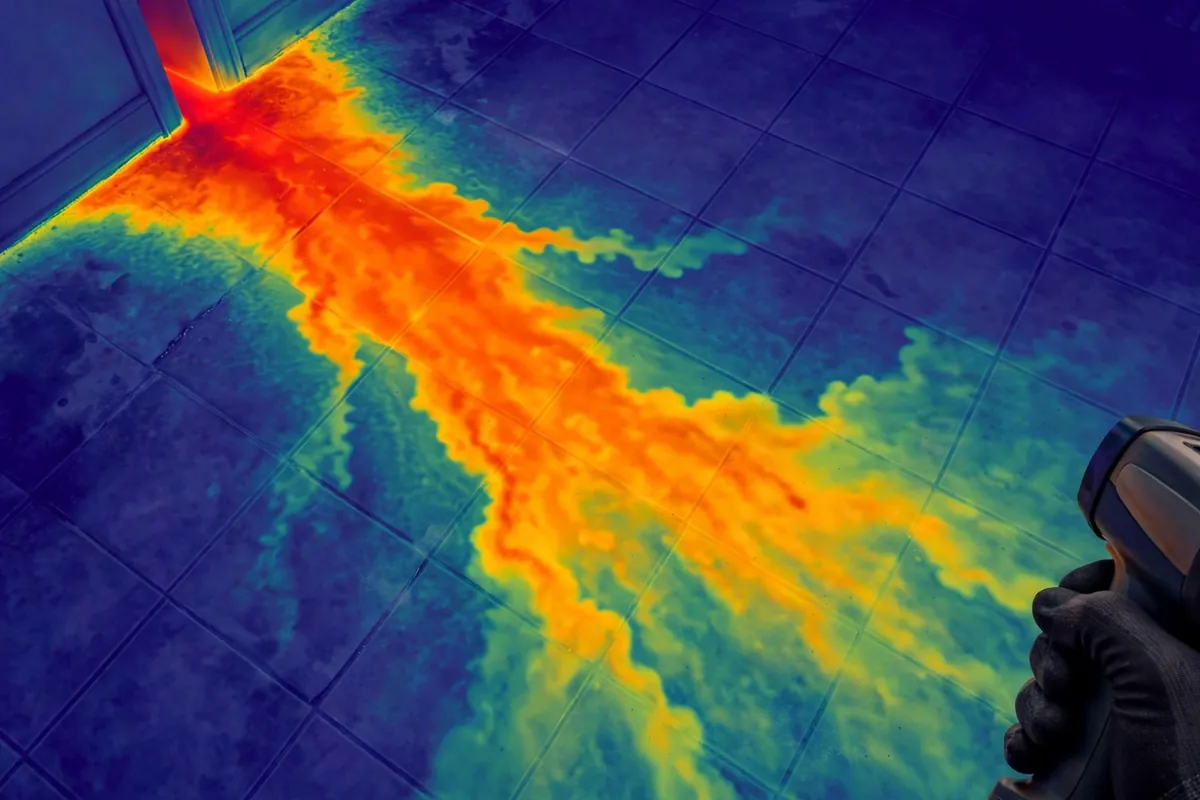
Acoustic listening equipment hears water escaping under concrete; thermal imaging maps the warm moisture plume across the floor; pressure testing confirms which line is leaking. The wet map is drawn before anything is opened.
2. Sequence With the Pipe Repair
The leaking line itself is repaired by a licensed plumber. Mitigation is sequenced around that repair: extraction and containment start immediately, because drying cannot win against water that is still flowing.
3. Extract and Remove What Cannot Be Saved
Surface water is extracted, and saturated materials that cannot dry in place (soaked padding, wicked baseboards, swollen laminate) are removed in a controlled, documented way.
4. Verified Structural Drying
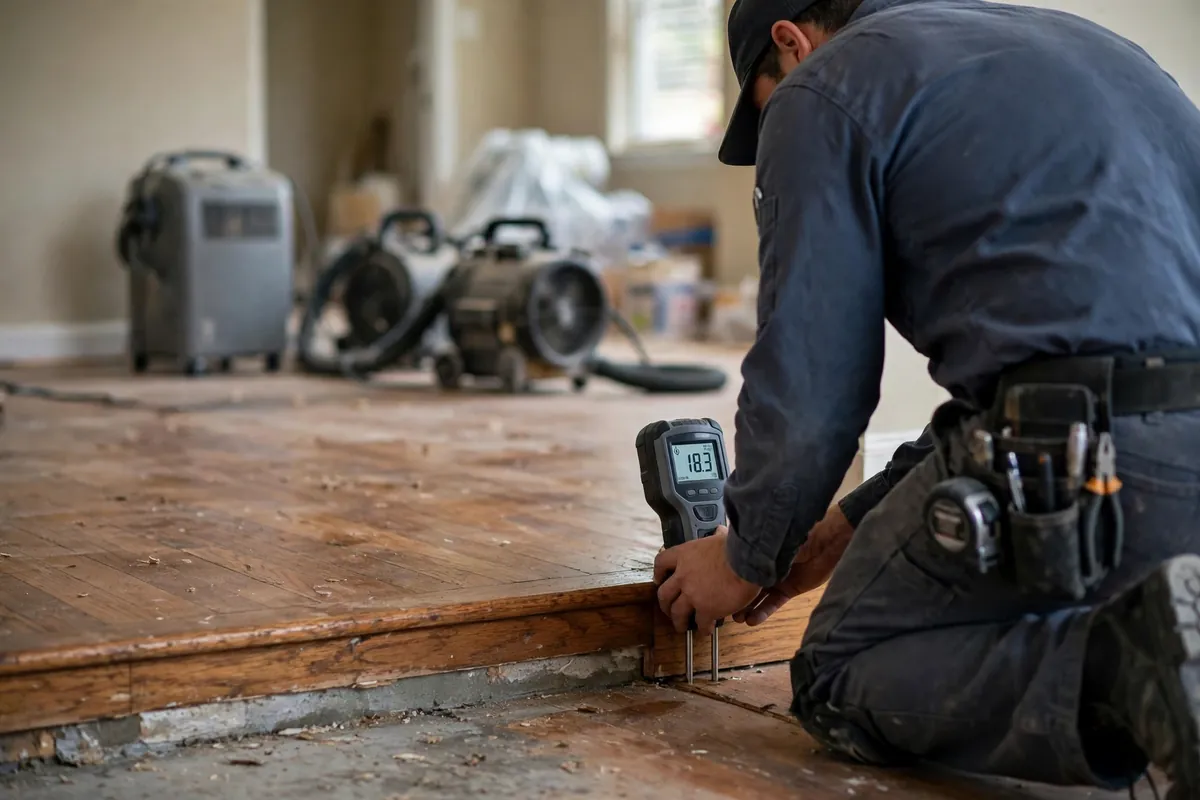
LGR dehumidification and directed airflow dry flooring, subfloor and wall bases over three to five days, confirmed by daily moisture readings against a dry baseline, the same verified approach used in our structural drying work.
What Slab Water Does to Floors and Walls
Moisture under a slab does not stay under it. It wicks upward through concrete, which is porous, into everything resting on it. Engineered hardwood and laminate drink it from below and swell at the seams. Tile loosens as thinset bonds fail. Wall bottom plates and the first inches of drywall absorb it at the floor line, creating the hidden moisture reservoir that feeds mold growth behind baseboards long after the surface looks dry.
This is also what makes slab leaks different from a burst pipe: the burst is an event with a start time you know; the slab leak is a process with a start time you do not. Moisture mapping at the first visit answers the only question that matters: how far has it actually spread? The cleanup plan is built on that map, not on assumptions.
Neighborhoods Served Across The Colony
Slab construction is universal here, so slab leaks are too. Older lines in North Colony and Legend Crest produce the classic pinhole cases; expansive-soil movement around Austin Ranch and the Cascades stresses newer lines; lakeside properties in The Tribute and Stewart Peninsula add high water tables that slow the drying side.
From lakefront streets in Stewart Peninsula to the townhomes around Austin Ranch and family subdivisions off FM 423, connected crews work across every part of ZIP 75056, including The Tribute, Cascades at The Colony, Legend Crest and North Colony. Wherever the water is, the response starts with one call to (972) 430-3265.
Before Help Arrives: Signs and Safe First Steps
A slab leak rarely announces itself with a flood. It shows up as small clues that are easy to explain away. If you notice two or more of these at the same time, treat it as a leak until proven otherwise.
- A warm spot on a tile or hardwood floor, often near a bathroom, kitchen or water heater.
- The sound of running water when every faucet and appliance is off.
- A water meter that keeps moving with all water turned off inside and outside the house.
- Damp carpet, lifting laminate or cracked tile with no plumbing fixture nearby.
- A musty smell along baseboards that does not go away with cleaning.
If you suspect a slab leak, close the main water valve and call a plumber for leak detection. Close the valve whenever you are away from the house until the line is repaired. Move rugs and furniture off any damp area, and take photos of the wet spots and the meter reading with the date.
Questions to Ask the Contractor Before Cleanup Starts
Slab leak cleanup works alongside the plumbing repair, so the order of work matters. Contractors reached through this line are independent local businesses. These questions help you understand how the job will run.
- How far has the moisture spread? Ask for readings in the rooms next to the leak, not just the wet spot.
- Can the flooring be dried in place? Some floors can, others cannot. Ask why for your floor type.
- How will you work around the plumber's access point? If the slab or a wall is opened for the repair, drying has to fit around it.
- How long do you expect drying to take, and how will it be measured? Concrete holds water for a long time, so meter readings matter more than how the surface feels.
- What will I receive in writing? A scope, photos and daily readings are reasonable to ask for.
Ask to see the contractor's license and insurance before signing the work authorization.
Slab Leak Water Cleanup: Common Questions
What are the signs of a slab leak under my floor?
A warm or damp spot on the floor with no spill to explain it, the faint sound of running water when every tap is off, a sudden unexplained jump in your water bill, or new cracks in tile, grout or walls. Slab leaks soak the soil and subfloor silently, so these small signs deserve fast attention.
Does the water damage contractor repair the leaking pipe itself?
This line is a free referral service and does not do the work itself. The restoration contractor you are connected with handles the water damage side: locating the moisture, extracting water, drying the structure and treating affected materials. The pipe repair itself is done by a plumber. Many restoration contractors can coordinate timing so the plumbing repair and dryout happen in the right order.
How is a hidden slab leak located?
Without tearing up floors first. Technicians combine acoustic listening equipment that hears water escaping under concrete, thermal imaging that maps the warm moisture plume, and pressure testing that confirms which line is leaking. Precise location means any floor opening is small and targeted.
Will my floors be damaged by the cleanup?
The approach is drying-first: extraction and dehumidification through the surface whenever readings allow it. Where moisture is trapped under flooring or inside walls, limited targeted access may be needed, and your technician will explain exactly where and why before anything is opened.
How long does slab leak water cleanup take?
Surface extraction is same-day work. Verified drying of flooring, subfloor and wall bases typically runs three to five days with professional dehumidification, confirmed by daily moisture readings. The underlying leak must be repaired promptly. Drying cannot win against water that is still flowing.