Mold Remediation & Antimicrobial Treatment in The Colony, TX
Black mold removal, negative air pressure containment, and EPA-registered antimicrobial eradication for residential and commercial structures in Denton County.
The 48-Hour Mold Warning in North Texas
Following water damage in The Colony, Texas, indoor temperatures and high humidity create a greenhouse incubator for mold. Within just 24 to 48 hours, fungal spores take root in damp drywall paper and wood cellulose.
Spraying standard bleach is ineffective; bleach is 90% water and only bleaches the surface pigment while feeding root hyphae behind drywall. Proper eradication requires physical source containment and EPA-registered fungicidal antimicrobials.
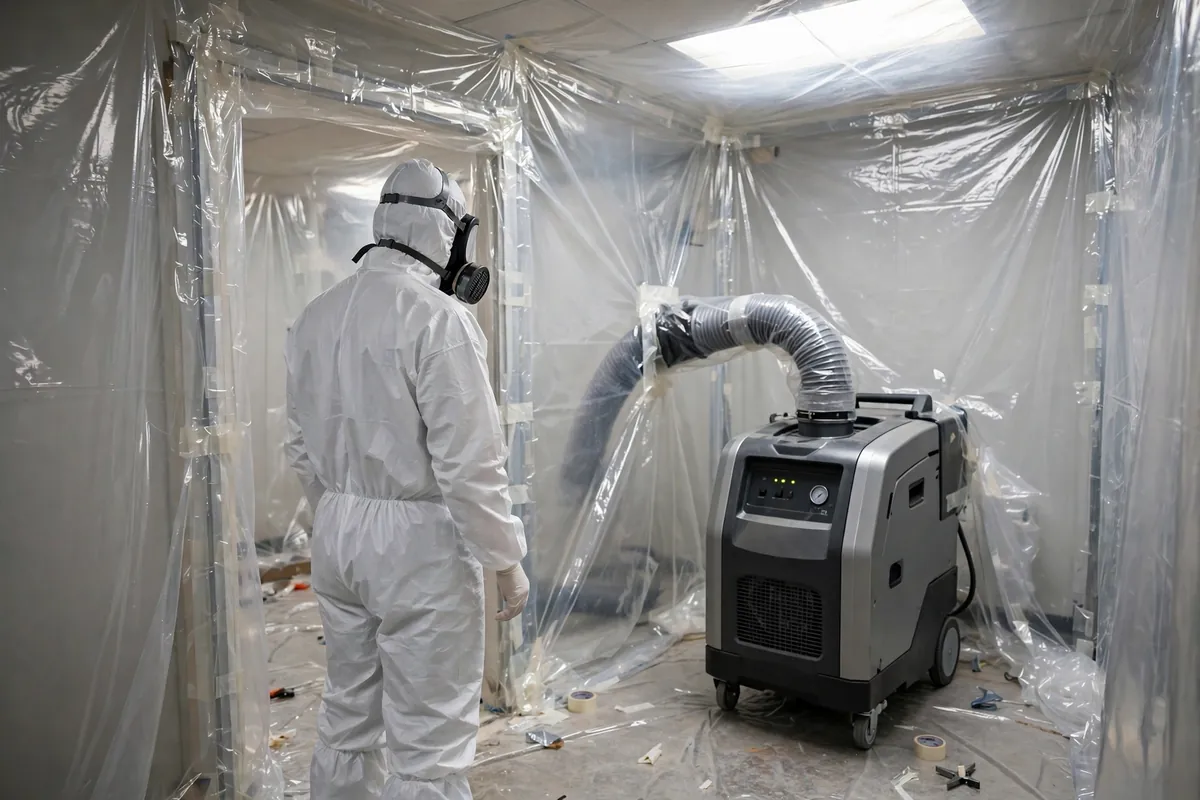
5-Step Mold Remediation Protocol
1. Thermal Moisture & Spore Inspection
Technicians trace the hidden moisture source feeding the mold colony using infrared imaging and moisture meters.
2. Sealed Containment & HEPA Filtration
Critical barriers seal off contaminated rooms, while commercial negative air machines with HEPA filters scrub 99.97% of 0.3-micron spores from the air.
3. Controlled Removal of Contaminated Materials
Irreparably colonized drywall, acoustic ceiling tiles, and carpet underlayment are bagged and removed following Texas Department of State Health Services (DSHS) regulations.
4. Botanical Antifungal Treatment & Encapsulation
Remaining structural wood framing is scrubbed, HEPA-vacuumed, treated with EPA-registered botanical antimicrobials, and sealed with antimicrobial primer.
Mold Testing Is a Separate Service
This referral covers mold removal only. Mold testing and air sampling are done by separate testing companies and are not part of it. Some homeowners hire an independent tester after removal to confirm the result.
Where Mold Hides After Water Damage
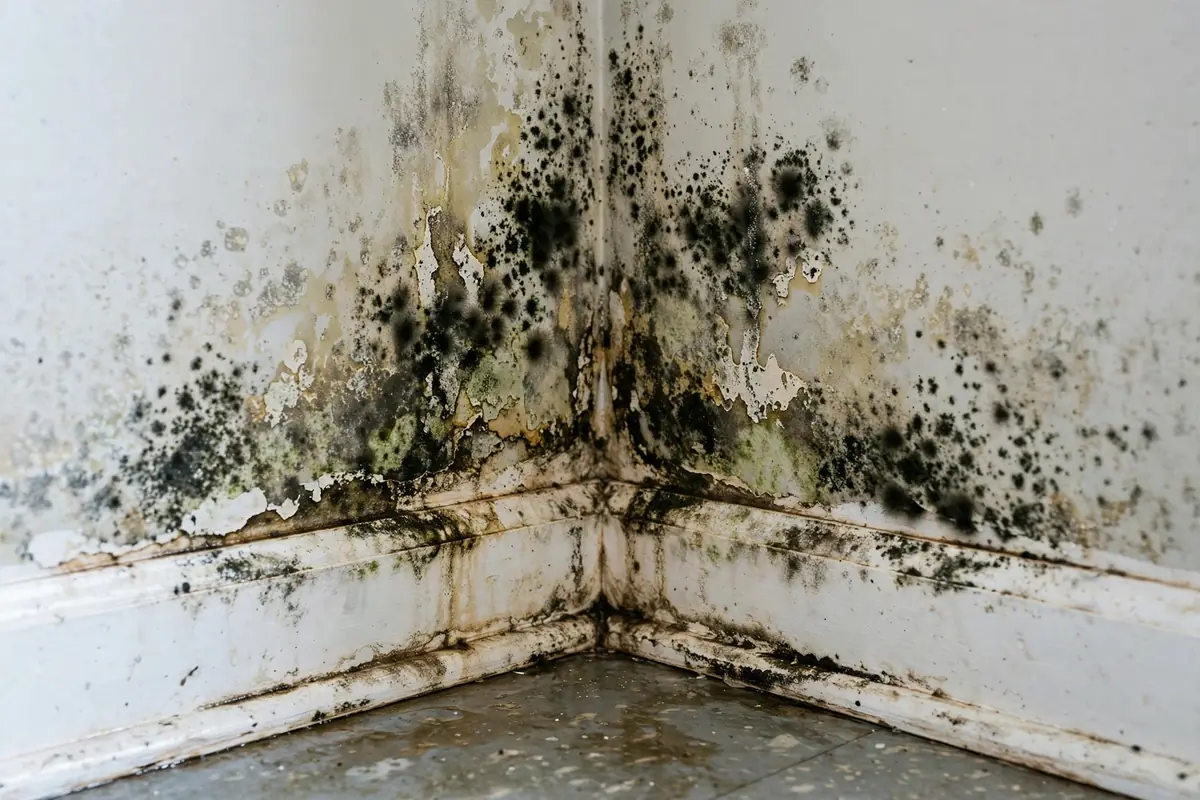
The colony you can see is usually the smallest one in the house. After a leak or flood, mold establishes first where air does not move: behind baseboards and inside the wall cavity behind them, under flooring at the wall line, inside HVAC closets and duct boots, in attic decking above a slow ceiling leak, and in the paper backing of drywall that wicked water from a burst pipe weeks earlier.
That is why remediation here starts with moisture mapping, not spraying. Thermal imaging and meter readings draw the true map of what stayed wet, and mold follows that map with total fidelity. Treating only the visible patch while a wet cavity feeds new growth is the most common reason homeowners pay for remediation twice. The permanent fix pairs removal with the verified structural drying that takes the moisture away for good.
Neighborhoods Served Across The Colony
Mold work is connected across all of ZIP 75056. Lakeside humidity keeps Stewart Peninsula and The Tribute homes at the highest baseline risk; slab leaks in North Colony and Legend Crest feed the hidden-cavity cases; newer Austin Ranch and Cascades homes most often call after appliance and water-heater leaks discovered late.
From lakefront streets in Stewart Peninsula to the townhomes around Austin Ranch and family subdivisions off FM 423, connected crews work across every part of ZIP 75056, including The Tribute, Cascades at The Colony, Legend Crest and North Colony. Wherever the water is, the response starts with one call to (972) 430-3265.
The Mold Species Found in North Texas Homes
Not every dark patch is the same organism, and honest remediation starts with proportion. Aspergillus and Penicillium are the everyday colonists of damp drywall and HVAC dust, present in most homes' air at low levels, a problem only when moisture lets them amplify indoors. Cladosporium favors window frames and damp bathrooms. Stachybotrys, the famous "black mold", is the slow one: it needs chronically wet cellulose, so finding it means finding the leak that fed it, often for weeks.
Species rarely changes the remedy (containment, removal, HEPA filtration, antimicrobial treatment, verified drying) which is why reputable work does not lead with fear. Completeness changes outcomes: every wet cavity mapped, every source eliminated.
Before Help Arrives: What Not to Do With Mold
When people find mold, the instinct is to scrub it, spray it or tear it out right away. Most of those moves make the problem bigger, because disturbing growth sends spores into the air and into the rest of the house.
- Do not dry brush, sand or scrape visible growth. That is the fastest way to spread spores into other rooms.
- Do not paint over it. Paint hides the stain but leaves the growth and the moisture behind it.
- Do not rely on bleach on drywall or wood. It may lighten the stain on the surface without reaching growth inside porous material.
- Turn off fans and the HVAC system serving the affected room if you can, so air is not moving spores around the house.
- Close the door to the room and keep people with asthma, allergies or weakened immune systems away from it.
- Look for the water source. A slow drip under a sink, a sweating AC line or a roof stain above the growth is the clue that matters most.
Taking clear photos of the growth and any nearby water stains helps the contractor understand the situation before the first visit.
Questions to Ask the Contractor Before Remediation Starts
Mold work should follow a clear plan: find the moisture, contain the area, remove what cannot be cleaned, and confirm the area is dry. These questions help you check that the plan covers each step. Contractors reached through this line are independent local businesses.
- What is causing the moisture, and who will fix it? Remediation without a moisture fix is temporary.
- How will the work area be contained? Ask about plastic sheeting, negative air pressure and HEPA filtration.
- What materials will be removed, and how will they leave the house? Bagging and sealing debris in the containment area is the safe approach.
- How will you confirm the area is clean and dry before rebuilding? Ask what checks are done and whether you receive the results.
- Is a separate assessment recommended? For larger areas, some homeowners hire an independent assessor to test before and after.
Ask to see the contractor's license and insurance and get the scope in writing before work begins.
Mold Remediation: Common Questions
How soon does mold grow after water damage?
Spores that are already present in every home can germinate within 24 to 48 hours on wet drywall paper, wood and dust in warm Texas conditions. That narrow window is why mold remediation almost always starts with finding and fixing the moisture source, then verifying the structure is dry.
Why is bleach not enough to kill mold?
Household bleach is mostly water. It bleaches surface pigment while its water content soaks in and feeds the root-like hyphae growing inside porous drywall, so the colony returns, often stronger. Real remediation means physically removing colonized material and treating structural surfaces with EPA-registered antimicrobials.
Is mold testing necessary before remediation?
A visible colony plus a moisture reading usually tells the story: the visible growth is removed and the water source feeding it is stopped. Testing and air sampling are done by separate testing companies and are not part of this referral, which covers mold removal only.
Is it safe to stay in the house during mold remediation?
The work area is sealed under negative air pressure with HEPA filtration, so spores cannot drift into living spaces. Occupants stay out of the contained zone itself while work is running. Your technician will tell you honestly if the size of the affected area makes temporary relocation the smarter call.
How do you stop mold from coming back?
By removing its water supply. Remediation includes locating the leak or condensation source, verifying with moisture meters that the structure is at dry baseline, and applying antimicrobial treatment to cleaned surfaces. If the moisture returns, so will the mold. The moisture fix is the permanent cure.