Structural Drying & Dehumidification in The Colony, TX
Eliminate deep trapped moisture from wall cavities, concrete slabs, and hardwood subflooring with commercial LGR dehumidifiers and high-velocity air movers.
The Science of Applied Structural Drying (ASD)
Water doesn't stay where it fell. In the humid climate of North Texas, evaporated moisture creates high relative humidity that penetrates secondary surfaces, absorbing into drywall ceilings, framing studs, and insulation.
Following industry drying guidelines, independent drying specialists balance vapor pressure, temperature, and specific humidity (Grains Per Pound, or GPP) to pull moisture from deep within building materials into the air, where commercial dehumidifiers condense moisture and pump it away.
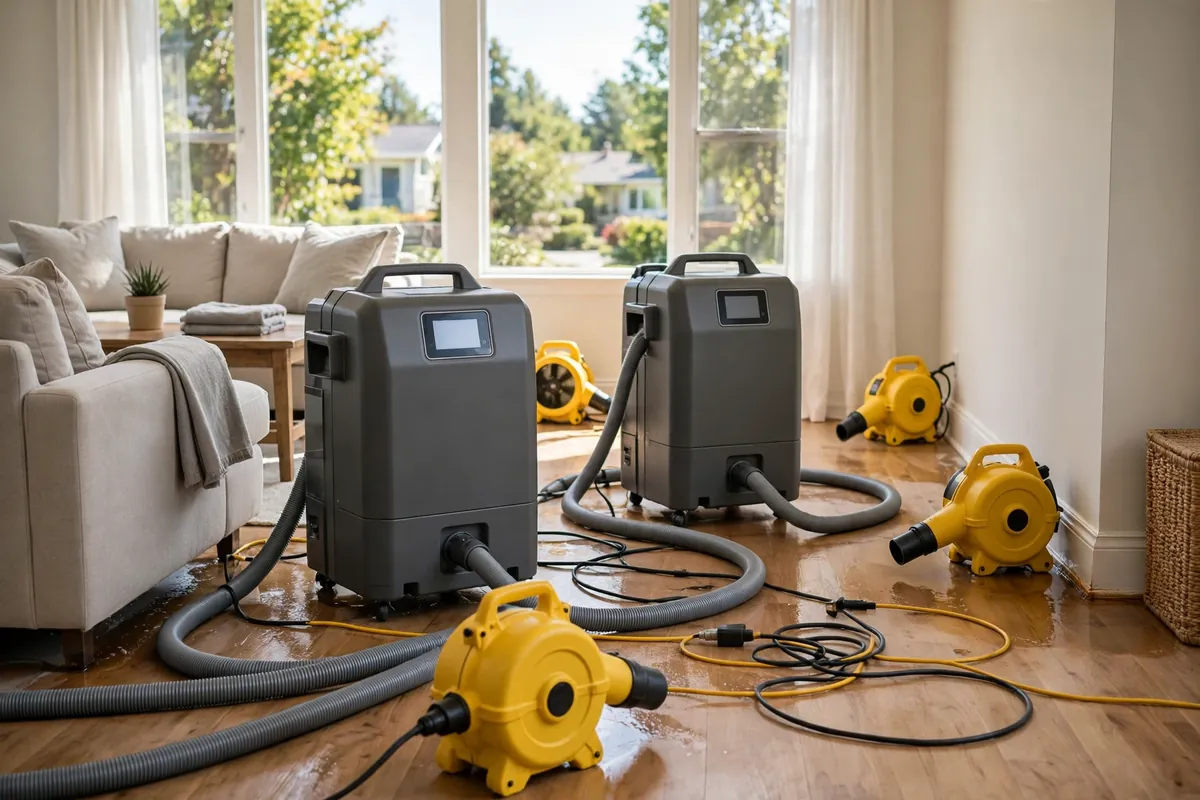
Industrial Drying Equipment Deployed
💨 Centrifugal Air Movers
Produce 3,000+ CFM of high-velocity airflow directed at 45-degree angles to break the surface boundary layer of moisture on walls and floors.
💧 Low Grain Refrigerant (LGR) Dehumidifiers
High-efficiency units capable of pulling moisture down below 30% RH even in cooler indoor environments, preventing fungal reproduction.
🌡️ Injectidry Wall & Floor Mat Systems
Negative air pressure mats placed directly over luxury hardwood flooring to vacuum trapped moisture out of subflooring without ripping up original wood.
📊 Daily Moisture Mapping Logs
Daily psychrometric readings and moisture logs verify that structural materials have returned to dry standards.
Preventing Secondary Structural Damage
Without professional drying, wooden wall studs remain moist for weeks, leading to drywall sagging, structural dry rot, and mold growth inside wall cavities. Technicians verify that structural materials return to standard baseline equilibrium moisture content before equipment is demobilized.
Drying The Colony's Housing Stock: Slab-on-Grade Realities
Almost every home in The Colony sits on a concrete slab, and that shapes the dryout. There is no crawlspace buffer: water from a burst pipe or appliance leak travels directly across the slab, under luxury vinyl and engineered hardwood, and wicks into the bottom plates of walls. Drying plans here start with floor-system readings, a surface that feels dry can hide a saturated subfloor layer that will telegraph damage for months.
Flooring decides the technique. Tile over slab tolerates aggressive drying. Engineered wood and LVP trap moisture at the glue and core layers, so mat systems and negative-pressure floor drying earn their keep. Solid hardwood gets injectable drying through the tongue-and-groove joints before cupping becomes permanent. In every case the target is the same: meter-verified dry baseline, documented daily, building on the water extraction stage that comes before this one.
Neighborhoods Served Across The Colony
Drying crews are connected across all of ZIP 75056. In The Tribute and Stewart Peninsula, lakeside humidity and storm exposure make verified drying, not just extraction, the difference between a save and a flood restoration. In Austin Ranch and the Cascades, newer slab homes with engineered flooring need the mat-drying approach described above. Legend Crest and North Colony family homes most often call after supply-line and water-heater failures.
From lakefront streets in Stewart Peninsula to the townhomes around Austin Ranch and family subdivisions off FM 423, connected crews work across every part of ZIP 75056, including The Tribute, Cascades at The Colony, Legend Crest and North Colony. Wherever the water is, the response starts with one call to (972) 430-3265.
Before Help Arrives: Helping a Wet House Start Drying
Drying a structure is a controlled process, but a few simple steps at home can slow the damage while you wait. They only apply to clean water. If the water came from a drain, a toilet or outside, keep the area closed off instead.
- Make sure the water source is stopped and the plumbing or roof problem is being handled.
- Remove what holds water. Take rugs, cushions, clothing, books and paper out of the wet rooms.
- Lift furniture onto foil, plastic lids or wood blocks so legs do not wick water.
- Keep the house cool and closed rather than opening windows on a humid Texas day, which can add moisture to the air.
- Run the air conditioning if the system and its ducts were not touched by the water. It removes some humidity from the air.
- Write down where you saw water and take photos, including inside closets and lower cabinets.
Box fans can move surface air, but they cannot pull water out of framing, subfloors or concrete. That takes dehumidifiers, air movers and regular measurement.
Questions to Ask the Contractor Before Drying Starts
Good structural drying is measured, not guessed. The contractors reached through this line are independent local businesses. These questions help you see whether the drying plan is based on readings.
- Where did you take your first moisture readings? Expect readings in walls, floors and nearby rooms, plus a dry reference point.
- What equipment are you placing, and why in those spots? Air movers and dehumidifiers should be set up for the room layout.
- Will any wall or floor need to be opened to dry? Sometimes a small opening speeds drying inside a cavity.
- How often will readings be taken, and will I see them? Daily readings on a log are a reasonable request.
- What tells you the job is finished? The answer should be materials matching the dry reference, not a number of days.
Ask to see the contractor's license and insurance and get the scope in writing before work begins.
Structural Drying: Common Questions
How do you know when my home is actually dry?
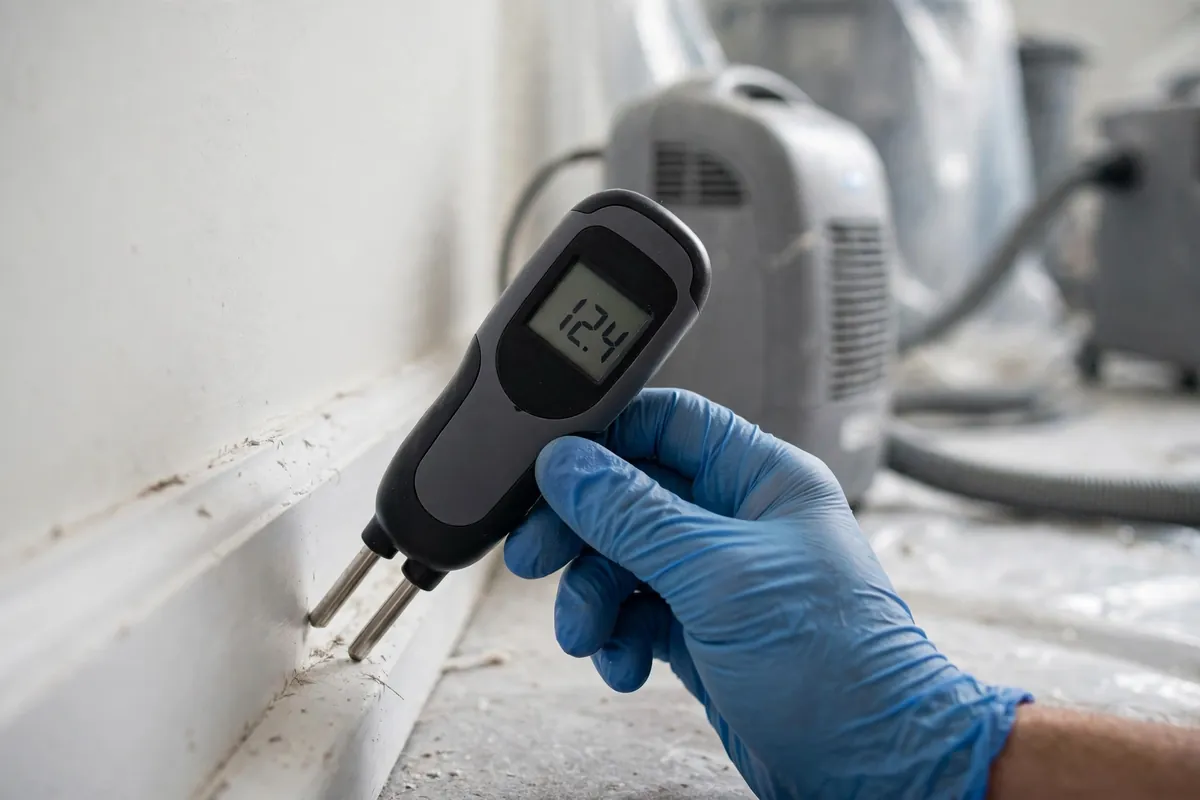
By measurement, not touch. Technicians take daily readings with pin and pinless moisture meters and thermal imaging, comparing wet materials against a known dry area of your home (the dry standard). Drying equipment is removed only when readings confirm the structure has returned to that baseline.
How long does structural drying take?
Most clean-water losses dry in 48 to 72 hours of continuous equipment runtime. Dense materials (hardwood floors, plaster, saturated wall cavities) can take four to five days. The clock runs until meter readings reach dry baseline, because stopping early is how secondary mold damage starts.
Why not just use household fans and open windows?
Fans move air but remove no moisture, and Texas humidity means open windows often add moisture instead of removing it. Professional drying balances airflow, temperature and LGR dehumidification, the science of psychrometrics, so water is pulled out of materials and captured, not redistributed around the house.
Will my walls need to be opened up to dry?
Not always. Baseboards can be removed and small vent holes used to dry inside wall cavities. Where insulation is saturated or contamination is present, a controlled flood cut may be the honest option. Drying-first techniques are always attempted before any demolition is recommended.
What is psychrometric drying?
It is the applied science behind professional dryouts: managing temperature, humidity and air movement together so evaporation from wet materials is maximized and the moisture is captured by dehumidifiers. It follows the industry's standard water damage drying approach, and it is why a metered professional dryout succeeds where fans alone fail.