Emergency Water Extraction in The Colony, TX
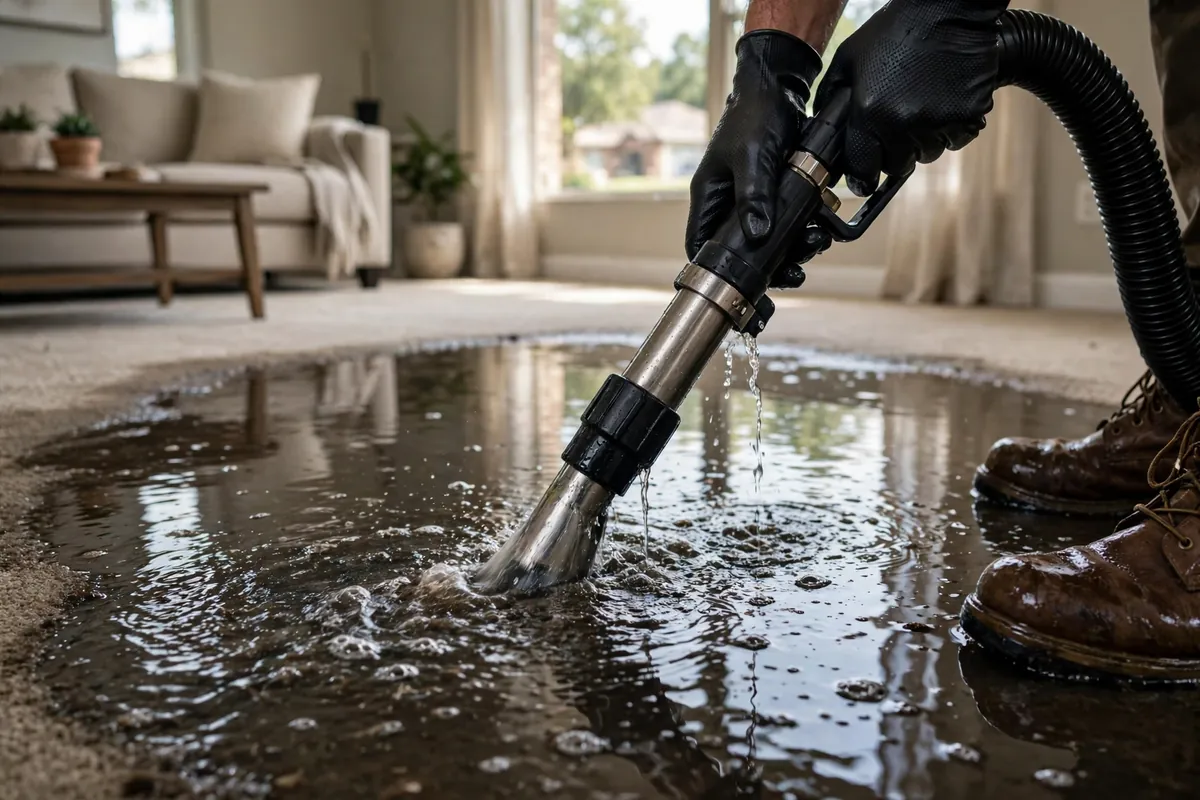
High-capacity truck-mounted vacuum extraction units remove standing water from flooded basements, living areas, and commercial properties.
Why Timely Water Extraction is Crucial (0-24 Hours)
Standing water is an active structural threat. When a water supply line fails or storm floodwaters intrude from Lake Lewisville, porous building materials begin absorbing moisture immediately:
- Within 1 hour: Drywall wicks water upward, baseboards swell, and carpet backing delaminates.
- Within 24 hours: Hardwood flooring cups and crowns; drywall structural integrity breaks down.
- Within 48 hours: Microscopic mold spores (Aspergillus and Penicillium) begin colony germination.
4-Stage Water Extraction Protocol
Thermal Moisture Mapping
Technicians deploy infrared cameras and non-penetrating RF moisture sensors to outline the exact perimeter of hidden water migration behind baseboards and beneath tile.
Industrial Submersible & Truck-Mounted Pumping
Heavy-duty commercial pumps discharge standing water through high-diameter hoses directly off-site, efficiently clearing standing water from submerged interior rooms.
Weighted Carpet & Subfloor Extraction
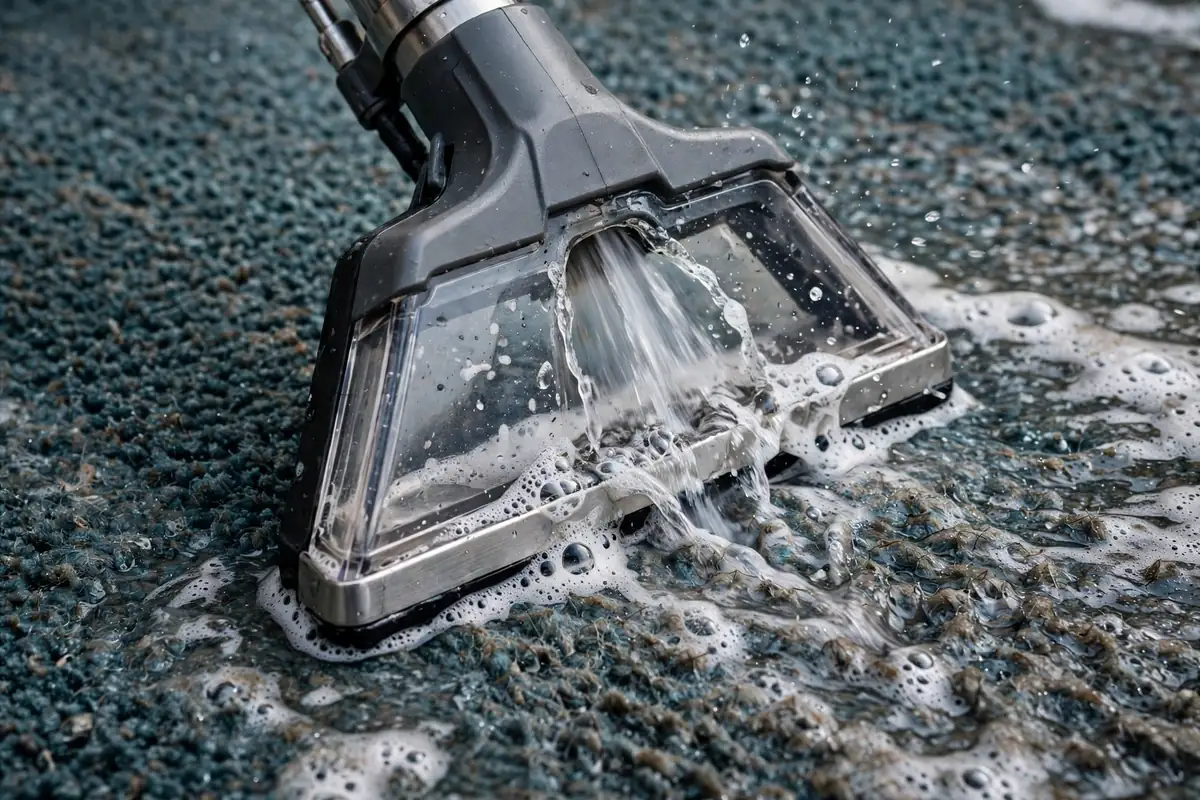
Using specialized self-propelled Hydro-X extraction tools, technicians extract embedded water from deep carpet fibers and subfloor padding without requiring full flooring tear-out.
EPA-Registered Antimicrobial Treatment
An EPA-registered botanical sanitizing agent is applied to neutralize surface bacteria and inhibit fungal microbial blooms before high-velocity drying equipment is powered on.
Serving All Subdivisions in The Colony, TX (75056)
Whether your residence is located along the shoreline in The Tribute, within the residential avenues of Austin Ranch, or in Stewart Peninsula, independent local contractors serve properties right off SH-121 and FM-423 to provide 24/7 emergency water extraction.
Know Your Water: Category 1, 2 and 3 Losses
Not all standing water is equal, and the category decides how your home is treated. Category 1 is clean water from a supply line, a burst pipe or a failed water heater. Category 2 carries mild contamination, like a washing machine overflow that has sat, or floodwater that entered from outdoors. Category 3 is grossly contaminated water from sewage and drain backups, and it follows an entirely different removal and sanitization protocol, one covered on our sewage cleanup page.
Categories are not fixed labels. Clean water left standing degrades as it dissolves building materials and picks up microbial growth, a Category 1 loss on Monday can behave like Category 2 by Wednesday. That clock is the practical reason extraction cannot wait for a convenient day: the category, and the damage done in removed materials, rises with every hour of contact.
From Extraction to Verified Dry: What Happens Next
Extraction removes the water you can see. The moisture you cannot see (wicked into drywall, trapped under flooring, pooled inside wall cavities) is mapped with thermal imaging and moisture meters immediately after pumping. That map drives the structural drying stage: LGR dehumidifiers and air movers placed by the numbers, with daily meter readings until every material returns to its dry baseline.
Skipping or shortening that stage is the most common cause of the musty odor and mold growth that appear weeks after a flood seems "handled." When you call, you are connected with independent local professionals who run the full sequence (extraction, mapping, drying, verification) and document each stage with readings and photographs for your records.
Before Help Arrives: What You Can Safely Do
Standing water is easy to see and easy to underestimate. While you wait for a contractor, the goal is simple: stop more water from coming in, keep people safe, and keep dry things dry.
- Stop the source. Close the main water valve, or the valve on the appliance that failed. For a water heater, close the cold supply line at the top of the tank.
- Think about power before you step in. If water is near outlets, cords or appliances, switch those circuits off at the panel only if the panel is in a dry spot. If it is not, stay out of the room.
- Find out what kind of water it is. Clean supply water is a different job from water that came from a toilet, a drain or outside. If there is any chance of sewage, keep children and pets away.
- Move valuables, electronics and paper off the floor and out of the wet rooms.
- Open interior doors between wet and dry rooms only if the water is clean. Do not turn on central air to blow air through a room with dirty water.
- Take photos and short videos of the water line on walls and furniture before extraction begins.
Household towels and a wet vac help on hard floors, but carpet and pad hold far more water than they show. Pressing on the carpet with your heel and watching water pool around your shoe is a quick sign that the pad underneath is saturated.
Questions to Ask the Contractor Before Extraction Starts
The contractor who answers is an independent local business. A short conversation before work begins sets clear expectations for both of you.
- What category of water do you think this is, and why? The answer changes what can be saved.
- Will the carpet pad stay or go? Pad is often removed even when carpet can be dried; ask for the reason in your case.
- How will you map moisture beyond the wet area? Expect meter readings into walls and neighboring rooms.
- What drying equipment will be placed, and where? Ask how long it is expected to run and how often readings are taken.
- What will I get in writing? A written scope, photos and a moisture log are reasonable to request.
Before signing, ask to see the contractor's license and insurance and read the work authorization in full. Clear answers now prevent surprises later.
Emergency Water Extraction: Common Questions
How fast should standing water be removed?
Within hours, not days. Every hour water sits, it wicks further up drywall, swells hardwood and saturates carpet padding. The first 24 hours decide whether materials can be dried in place or must be removed, so extraction is the single most time-sensitive step in the whole restoration process.
What equipment is used for emergency water extraction?
Professionals use truck-mounted extractors for volume, portable high-power extractors for upper floors and tight spaces, submersible pumps for deep standing water, and weighted extraction tools that pull water out of carpet and padding together, far beyond what a household wet-vac can achieve.
Can water be extracted from hardwood floors?
Yes. Specialized floor-drying mats create negative pressure that draws moisture up through hardwood boards, and injectidry-style systems dry inside wall cavities. Success depends on speed. Hardwood that is extracted and dried within the first day or two often recovers without cupping or replacement.
Do I need to move my furniture before extraction?
If it is safe, move small valuables, electronics and anything paper or fabric off wet floors. The responding crew handles heavy furniture, lifting it onto blocks so air can circulate underneath while the floor dries. Do not enter standing water if it has reached electrical outlets.
What happens after the water is extracted?
Extraction is step one. Next comes moisture mapping to find hidden water in walls and subfloors, then structural drying with dehumidifiers and air movers until meter readings confirm everything is back to dry baseline. Skipping the drying stage is the most common cause of mold problems after a flood.