First, stay safe
The water inside the tank can be scalding, and the unit is connected to gas or a high-current electric circuit. Do not touch the tank, the pipes on top or the drain valve with bare hands until it has been off for a while. If you smell gas, leave the house and call the gas utility from outside before doing anything else.
Step 1: Turn off the cold water supply
Follow the two pipes on top of the tank. The cold supply line usually has a valve within arm's reach. Turn a round handle clockwise until it stops, or turn a lever handle a quarter turn so it sits across the pipe. This stops fresh water from feeding the leak. If the valve will not move or keeps dripping, close the main shutoff for the house.
Step 2: Cut the energy source
- Gas water heater: turn the control knob on the gas valve to OFF, or to PILOT if you plan to relight it soon. Close the gas line valve so the handle sits across the pipe.
- Electric water heater: switch off its double breaker at the panel. Never run the elements in a tank that may be empty.
Step 3: Find where the water is coming from
The leak location tells you a lot about what has failed:
- Pipe connections on top: often a loose fitting or failed supply line. These can usually be repaired.
- Temperature and pressure relief valve or its discharge pipe: the valve may be releasing because of high pressure or heat, or it may be worn. A plumber should check it, because it is a safety device.
- Drain valve near the bottom: may only need tightening or replacing.
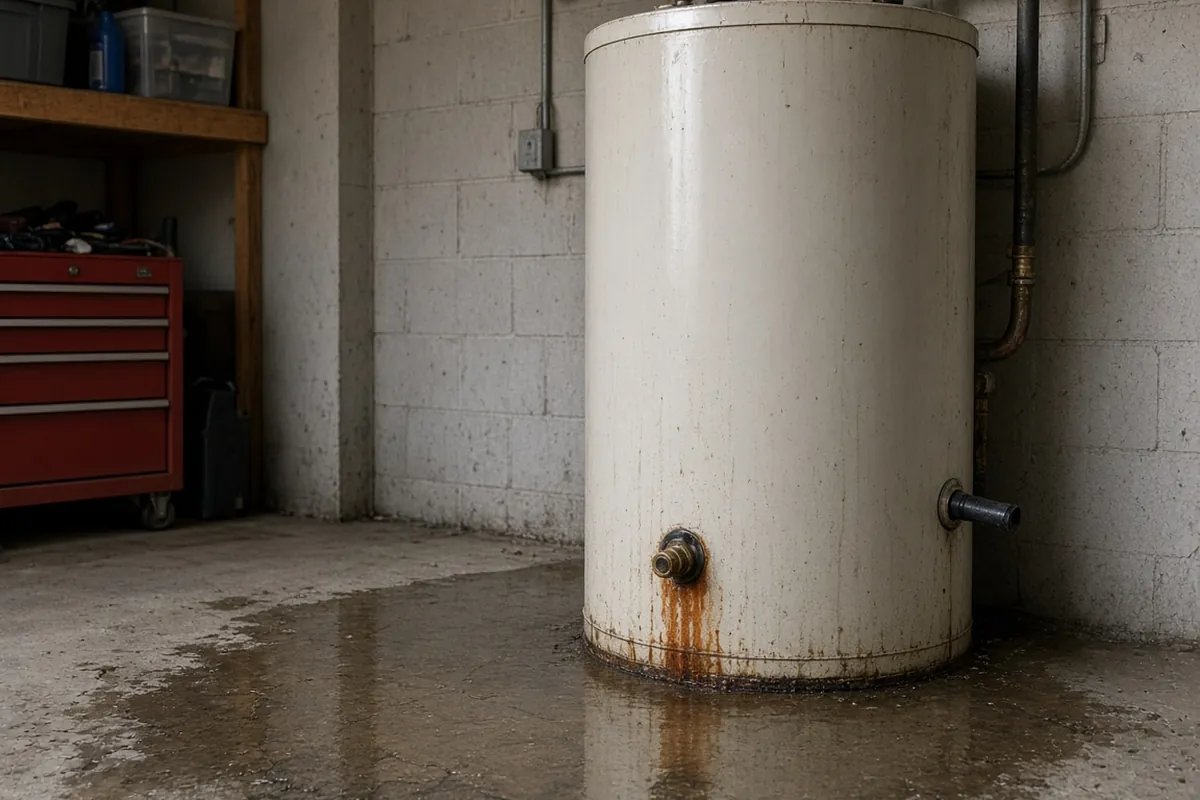
- The bottom of the tank itself: usually means the inner tank has corroded through. That cannot be repaired, and the unit will need replacing.
Step 4: Drain the tank if the tank itself is leaking
If water is coming from the tank body, draining it limits how much more ends up on the floor. Let it cool first if you can. Attach a garden hose to the drain valve at the bottom, run the hose to a floor drain or outside, open a hot water faucet in the house to let air in, then open the drain valve. Watch the hose end, because the first water out will be hot.
Step 5: Check the rooms around it
Water heaters in The Colony are often in a garage, an attic platform or an interior closet. A slow leak can run under a wall into a bedroom or hallway, or soak through an attic platform into the ceiling below. Look for darkened baseboards, swollen trim, and soft or bubbling drywall in the rooms next to the heater. Attic units are the most dangerous: a wet ceiling below needs attention right away. Our first-hour checklist covers what to do next.
Signs a water heater is near the end of its life
- Rust-colored hot water, or rust around the base or fittings.
- Rumbling or popping noises as it heats.
- Moisture or small puddles around the base.
- A tank older than about 10 years. Check the date in the serial number on the label.
When to call
A plumber replaces or repairs the heater. If water has spread into flooring, walls or the ceiling, you also need the area dried out properly before mold has a chance to start. A local restoration contractor can measure the moisture and handle structural drying and, if needed, mold remediation.
Water heater leak already soaking into flooring or walls?
Call 24/7: (972) 430-3265The Colony Water Damage is a free referral service. Your call connects you with an independent local contractor.